

Google Ads or Meta Ads for a Dehradun business: where your first budget should go
By AnyInfraTech Team · · Updated 05 Nov 2026
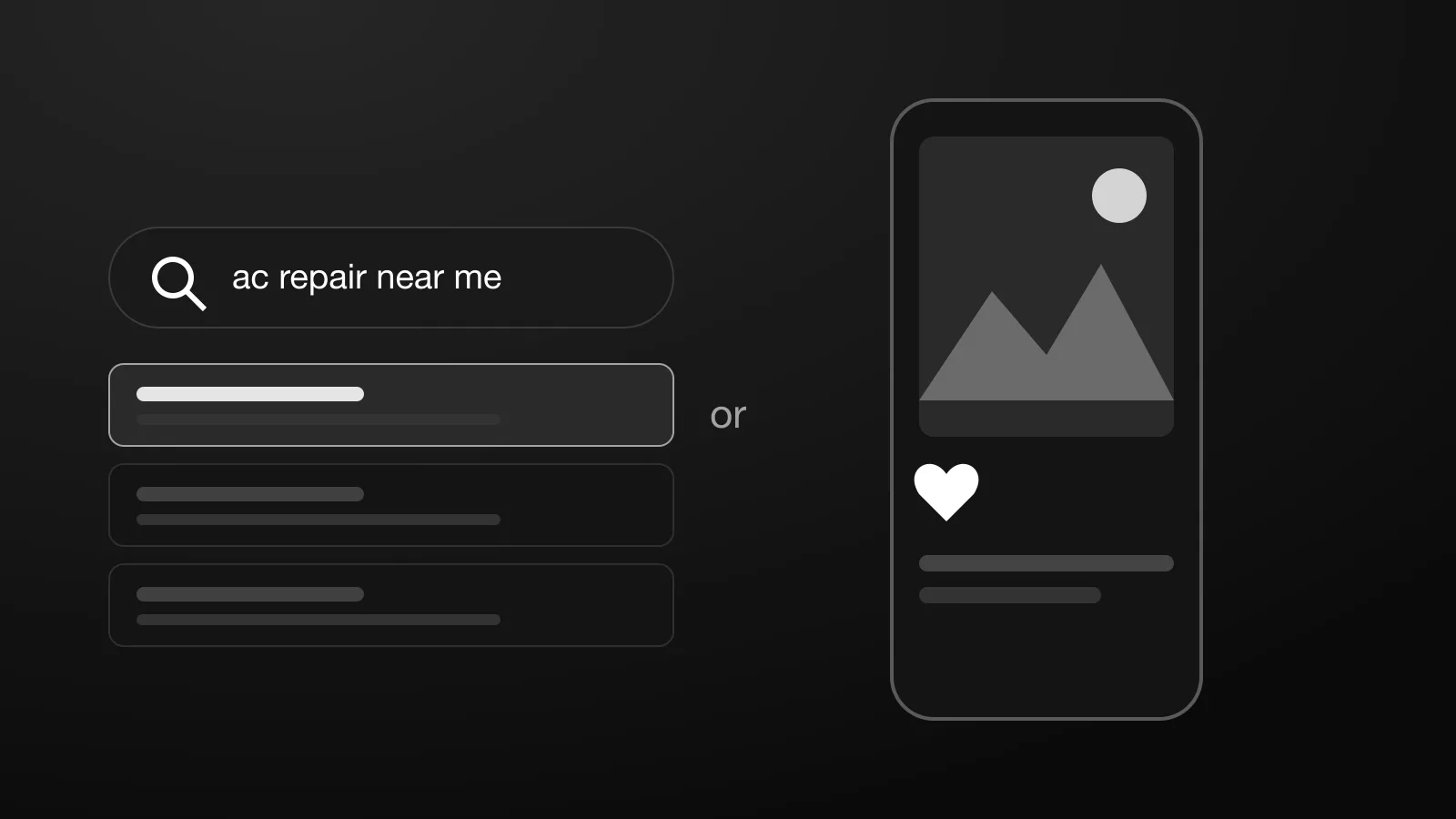
Most small businesses in Dehradun ask this the wrong way round. They ask which platform is better. The useful question is simpler: are people already searching for what you sell?
If they are, start with Google. If they aren't, or if what you sell needs to be seen before it is wanted, start with Meta. Nearly everything else in this guide follows from that.
What each platform really sells
Google Ads puts you in front of intent. Someone types "dentist near ISBT Dehradun" or "AC repair Rajpur Road" and your ad appears at that moment. You pay for a click from a person with a problem they want solved today.
Meta Ads (Facebook and Instagram) puts you in front of attention. Nobody opened Instagram to find a resort in Dhanaulti, but a good reel can make them want one. You are creating the demand, so the lead is usually colder and needs more follow-up.
Neither is better. They do different jobs, and a business that uses the wrong one for its stage usually decides that "ads don't work".
Which one first, by type of business
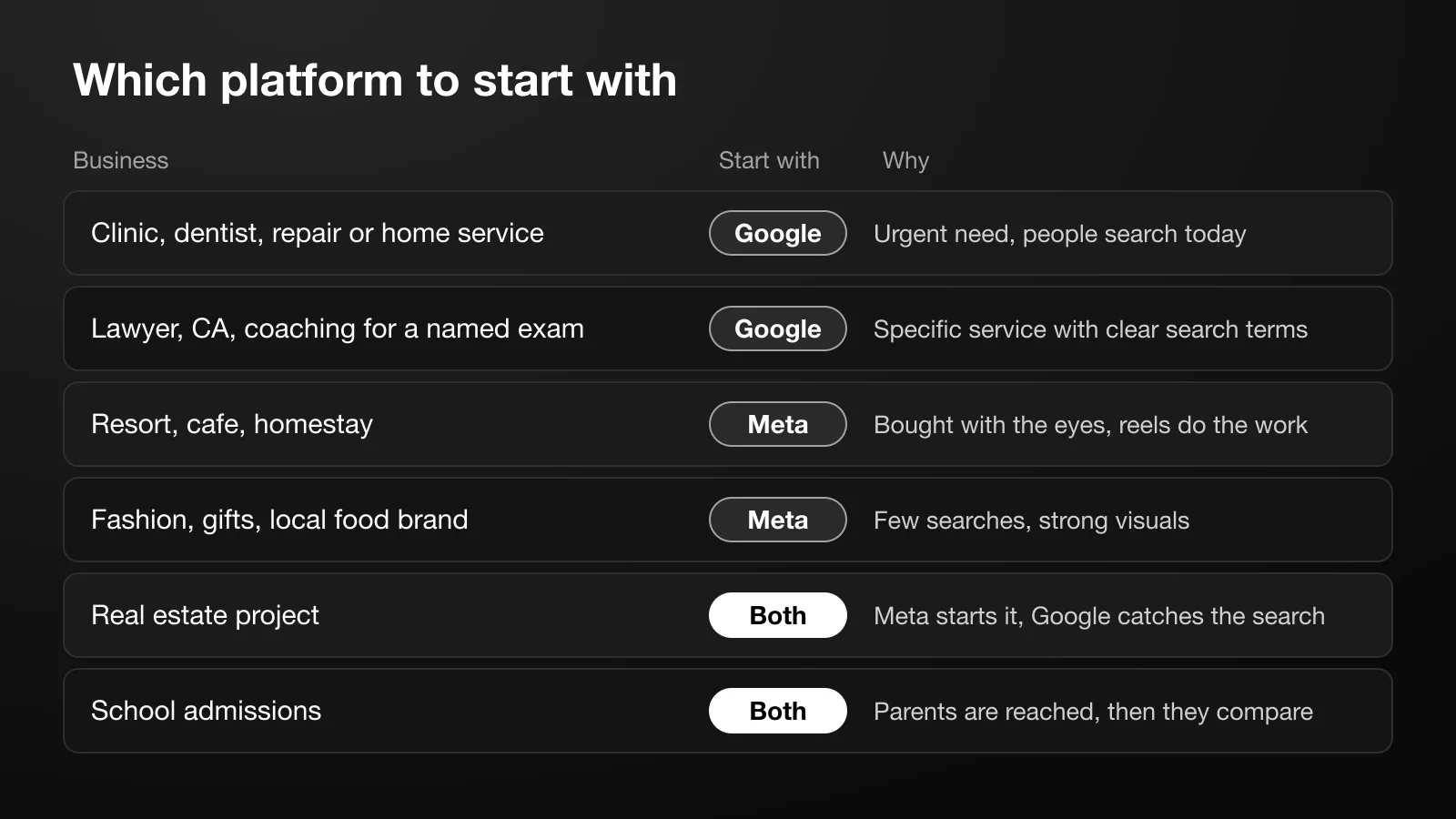
The pattern is easy to read. Urgent needs and named services go to Google. Things people buy with their eyes go to Meta. Big decisions with a long think, such as a flat or a school, usually need both, with Meta starting the conversation and Google catching people when they search your name later.
What to fix before you spend a rupee
Ad money is the most expensive way to find out your follow-up is broken. Check these three things first:
- A page that matches the ad. If the ad is about root canal treatment, the click should land on a root canal page, not your homepage. Google's Quality Score looks at expected click-through rate, ad relevance and landing page experience, and a better score can mean lower prices.
- Tracking you trust. Set up conversion tracking for form submissions, calls and WhatsApp clicks. Without it you are judging ads by how many likes they got.
- Someone who replies. A lead that waits until evening has often called two other businesses. Our guide on following up property enquiries is written for real estate, but the same rule holds for almost anyone.
How to start on Google
Keep the first campaign small and boring. One service, one location, one landing page.
- Use Search campaigns first. Leave Display and other placements for later.
- Choose a tight set of keywords with buying intent, and check the search terms report every week.
- Add negative keywords as you go. Words like "free", "jobs", "course" and "salary" waste money for most service businesses.
- Set your location to where customers are, and choose people in that area rather than people merely interested in it, unless you sell to visitors.
A note on budgets: Google can spend up to twice your average daily budget on a busy day, though your monthly charge stays capped at the daily budget times 30.4. So one expensive day is not a mistake on the account.
How to start on Meta
Meta rewards good creative more than clever settings. A plain phone video of your real clinic, site or property will often beat a polished poster.
- Make three or four ads with different opening lines, not one ad with a large budget.
- Show the real thing: the room, the team, the finished work.
- If you use lead forms, add one or two qualifying questions. You get fewer leads and far better ones.
- Connect the form to WhatsApp so that a reply goes out within minutes. See WhatsApp Business app vs API if you are unsure what you need for this.
Give a campaign a couple of weeks before judging it. Changing ads every other day resets what the system has learned and tells you nothing.
When to run both
Add the second platform once the first one brings leads you can afford, and only then. A common and sensible setup for Dehradun real estate, schools and resorts looks like this: Meta reaches new people, a share of them search your name a few days later, and a small Google campaign on your own brand and core terms catches them.
If you run both, ask every lead where they first heard of you. Platform reports both claim credit for the same person, so your own CRM or even a simple spreadsheet will be more honest than either dashboard.
The number to watch
Ignore clicks and reach at first. Work out cost per real conversation: ad spend divided by the people who picked up the phone or answered on WhatsApp and were a real prospect. That single number tells you whether to raise the budget, fix the page, or fix the follow-up.
If you would like someone to set this up or check what your current campaigns are doing, see our Google and Meta ads service. We don't promise a fixed number of leads, and you should be careful with anyone who does.

 WhatsApp